Smart Locker System for Enterprises in Europe: 6 Trends that matter in 2026
April 22, 2026
Why smart locker systems matter right now
In European enterprises, manual IT hardware distribution generates measurable costs every single day: IT teams spend valuable time on handovers, assets go missing, and employees wait for equipment that is technically available. According to industry data, companies that deploy a smart locker system report up to 50% fewer IT support tickets simply by automating dispensing and return workflows.
IT hardware is the most direct connection between an employee and their work. No device – no output. No connection – no company.
What was once a basic dispensing cabinet is now evolving into an active component of IT asset management and internal logistics. The driving forces: growing demands for transparency, GDPR compliance, hybrid working models and pressure to reduce operating costs without sacrificing service quality.
Offices are changing. Working hours are becoming more flexible. Teams are spreading across locations and time zones. But one thing remains constant – or becomes even more important: IT hardware. It is the most essential tool in modern working life. That makes its reliable, flexible provisioning a strategic priority – not an afterthought in day-to-day IT operations.
- 50% fewer IT support tickets through automated self-service dispensing
- 24/7 IT hardware availability with zero additional staffing
- 13,5% annual market growth for enterprise smart lockers through 2032
Key insight for IT decision-makers: A modern smart locker system is no longer a cost centre – it is a cost-reduction instrument. It lowers loss rates, makes asset tracking watertight, and frees up IT team capacity for higher-value work.
The 6 most important smart locker trends for enterprises
Trend 01: Edge AI – intelligence built into the locker
Modern enterprise locker systems in Europe are shifting computing power to the endpoint. Rather than sending all data to the cloud, local edge modules handle authentication, validation and anomaly detection directly on the device – with minimal latency. The cloud remains responsible for higher-level tasks: policy management, historical analytics and optimisation logic. The result: faster processes, lower bandwidth costs and greater operational resilience.
IT support must adapt to new ways of working – not the other way around. Hybrid teams need a supply chain that is as flexible as they are.
Trend 02: API-first integration with ERP, ITSM and warehouse management
A smart locker system that operates in isolation never reaches its full potential. The decisive advance in 2026: standardised APIs, event streams and webhooks that turn lockers into modular building blocks within existing enterprise architectures. In practice, a locker event automatically creates a record in the IT asset management system, updates stock levels and can trigger an ITSM ticket workflow – all without manual intervention.
Trend 03: Biometrics, passkeys and GDPR-compliant security
The question in 2026 is no longer whether to implement advanced security, but how. Mechanical locks are being replaced by multi-layer digital authentication: biometrics (where GDPR-compliant), passkeys, OTPs and mobile access solutions. Audit-proof logs, role-based access controls and time-synchronised records are prerequisites for regulated sectors.
Trend 04: Micro-fulfilment and last-metre automation in IT field service
Smart locker systems are firmly establishing themselves as the final step in IT hardware logistics. Instead of ad hoc handovers, organisations now have planned, auditable processes: hardware is loaded in advance, employees receive automatic notifications and collect independently – at any time of day. This reduces operational complexity and enables scalable 24/7 supply.
Time and space are becoming more fluid – but IT hardware remains. It is the strongest and most constant link between employees and their organisation. More so than the office itself.
Trend 05: Governance and complete asset traceability
The 2026 standard: time-synchronised logs from lockers, cameras and enterprise platforms – delivering complete transparency within automated IT asset management processes. Organisations without solid governance infrastructure risk compliance gaps and complicated internal audits.
Trend 06: Personalisation, accessibility and adaptive user experience
Modern smart locker systems are evolving from static kiosk terminals into adaptive, user-centred systems. Personalised interfaces automatically adjust language and navigation flows. Accessible design is an increasingly statutory requirement under the European Accessibility Act.
OfficeButler24: the modular smart locker system for enterprises in Europe
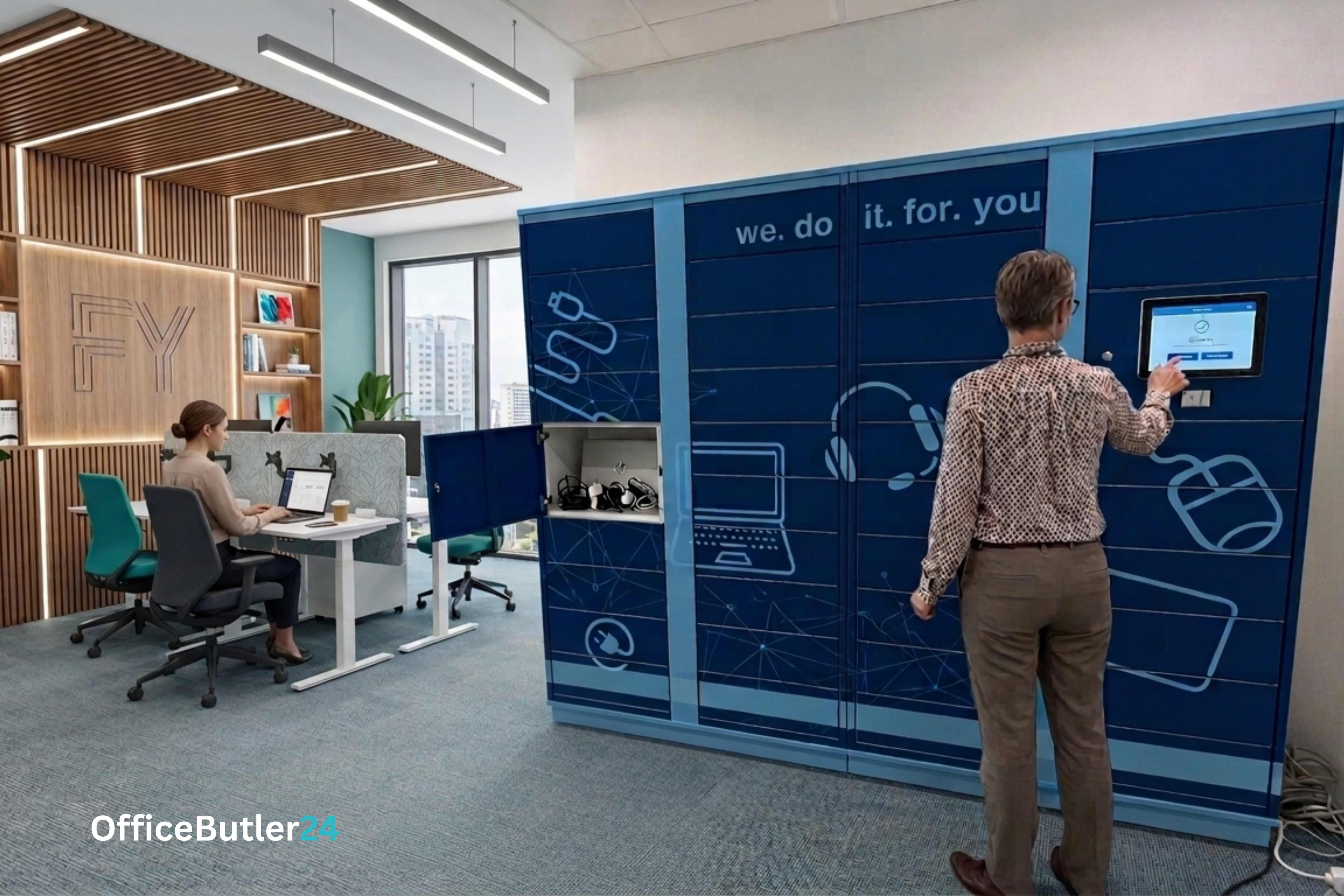
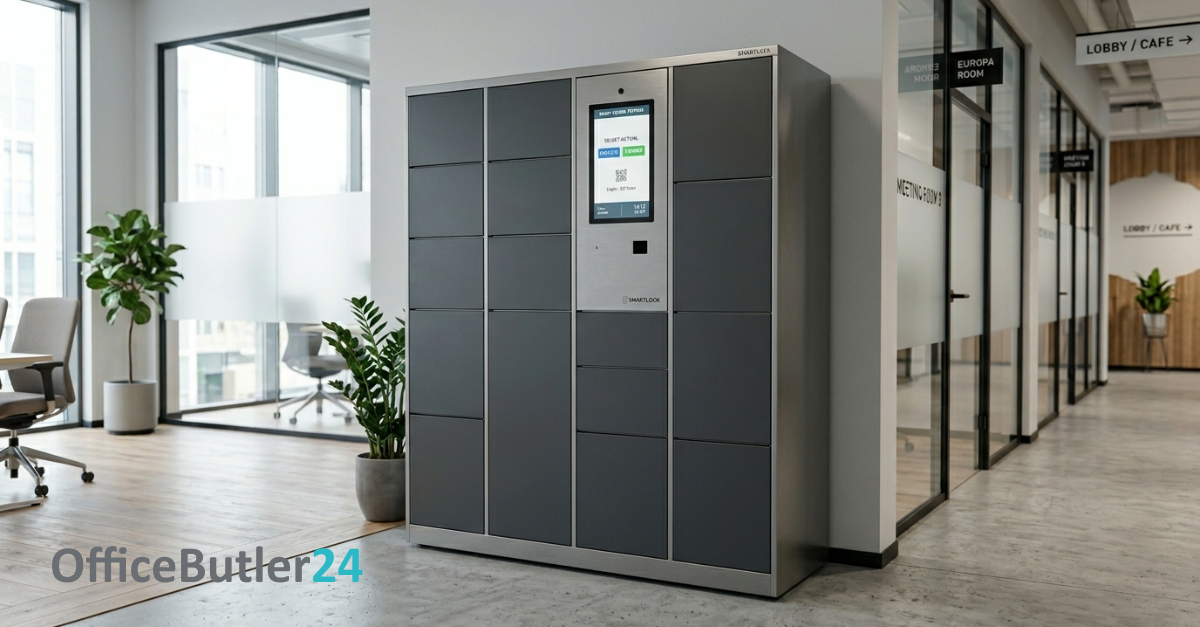
OfficeButler24 is a modular smart locker system developed specifically for the requirements of European enterprises. It connects employees, external partners and suppliers within a single, centrally managed system.- IT hardware dispensing and returns – fully automated, 24/7, with complete asset tracking
- Secure document handover – audit-proof and GDPR-compliant
- Automated delivery and collection processes – for internal logistics and external suppliers
- Fleet and device management – including consumption controls and cost-centre allocation
A fully functioning IT infrastructure is the strongest connection to the organisation. OfficeButler24 makes sure that connection never breaks.
OfficeButler24 is designed specifically for the European market – with native GDPR compliance, English-language support and integrations for leading ERP and ITSM systems. Request your demo!